

Every form of media out there is trying to tell us some form of story. TV, Film, even advertising is there to craft some sort of narrative to sell to us in some way, but I think no medium achieves that better than video games. When I’m playing a game I’m not just watching the action unfold, I’m making it unfold. Actually being in control of what’s going on and how everything plays out gets me more invested in the world I’m in than any other form of storytelling.
So today, I want to celebrate that. I want to talk about my favourite stories that video games have ever told me, and break down just what it is that makes it brilliant and why they draw the emotions out of me that they do.
NOTE: This post will contain both minor and major SPOILERS for each of the games I’m talking about, so be warned.
Bully
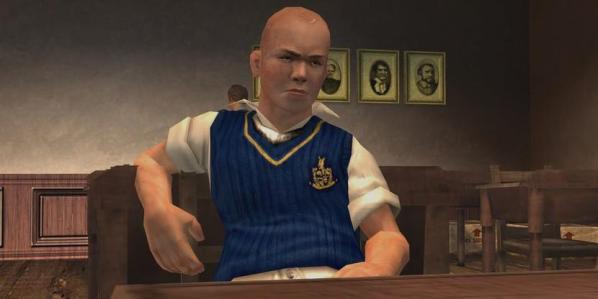
Bully is somewhat unique in why its story is so effective. Normally in games, the story of the game serves to build the world, but in Bully I find that the world is what makes the story so much fun.
Setting the game in a school seems like such a simple change from Rockstar’s usual formula, but it completely transforms your attitude towards all of the characters you encounter. It does such a brilliant job of emulating your time in school and capturing that feeling of wandering around a school and recognising all the faces and going to all the classes.
That dynamic creates a weird relationship with the main villain in Gary, because he’s so evil and hatable, but unlike something like GTA, you can’t just go and fight him because you’ll get expelled from school. This causes the story to become more about using the intricate social construct of the school to undermine him and take his power away like that.
It’s exactly the kind of story that you would come up with when in the playground at school, and I think that makes it all the more brilliant.
The Stanley Parable
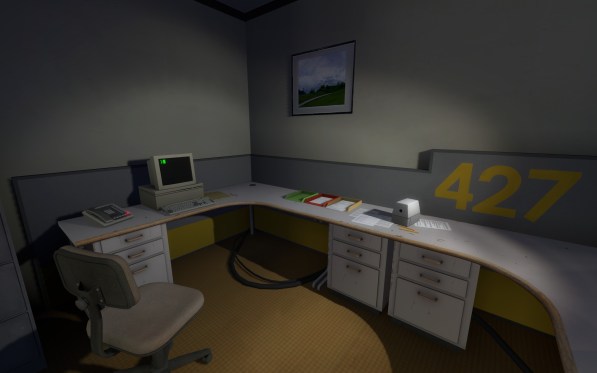
“Story” may not quite be the right word to describe what takes place in the Stanley Parable, more of an experiment.
That said, there is a very simple story there, all you have to do is listen to the narrator and you get told a simple story about a man named Stanley fighting against the system to gain his freedom. As I’m sure most of you know by now though, that’s not where the brilliance of this game lies.
The Stanley Parable was the first game to properly take the idea of a “meta-narrative” and run with it. There’s been a lot of games who’ve tried since, and many have done a rather good job of it, but I don’t think any have topped this one.
All of the jokes and narrative points are things that can only come from truly understanding exactly how a game works. Anyone can make some jokes about common gaming tropes, but it takes a deep understanding of how a game is constructed in order to totally obliterate it like The Stanely Parable does.
Subsurface Circular
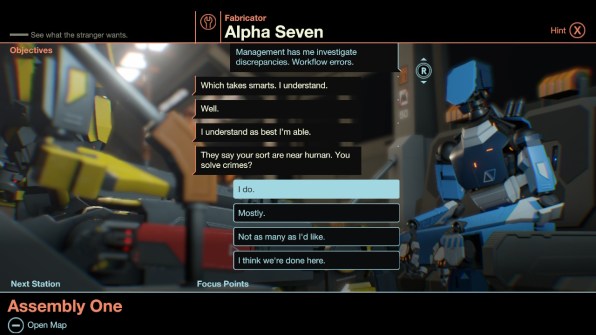
I’ve spoken about Quantum Circular a fair bit in the past, but I’ve never had much of a chance to talk about its predecessor, Subsurface Circular.
This game gives you a very simple premise, and then sends you off to learn all about the world, using the framing of trying to solve a mystery. You then spend the whole game riding around on one train line and encountering lots of different people from all different areas of this society and while interrogating them, they tell you their stories. Why they’re on the train, how they’re feeling about their life, what their goals and hopes are, and the entire game serves as to build up to one of the hardest choices I’ve ever had to make in a game.
We’re going into full SPOILER territory now, so if you want to play the game yourself, then it’s time to scroll down to the next game.
During your investigation, you find about this figure, who is in charge of a rebellion, which is looking to overturn the current government and install a new one, and he gives you a very simple choice. Kill him and stop the revolution, or kill yourself and allow the revolution to take place. I went back and forth on this choice so many times, because I’d spent the past few hours learning all about the world, seeing good people who have had their lives destroyed by the government and good people who rely on this government for their livelihood.
On top of all that, the game doesn’t let you see the result of your choice, which is such an underused, yet brilliant technique. It means there is no “right” choice, the game leaves you to ponder it in your own head and an experience like that is something that stays with you for a long time.
Life is Strange

No points for guessing this one would be on the list.
Life is Strange takes a similar setting to Bully, but goes more down the path of realism, than nostalgia. The characters in Life is Strange are very grounded in reality, even if they do have some more “out there” traits.
It’s another game that spends so much time getting you invested in the world and all the characters in it, only to turn all that emotional investment around on you at key points in the story. I had some level of emotional connection to every character in Life is Strange, regardless of whether it was positive or negative, I cared about all of them in some way, and I could actually remember all of their names, which is a rarity for a game with as many characters as this one.
Then we come to the most memorable point of this game, the final choice. (Full SPOILER territory coming at y’all right now.)
I was in an odd position going into Life is Strange, because I went into it already knowing what the final choice was, and it seemed like an easy choice at first. Then I played through the game, and when I came to the final choice, I suddenly realised just how difficult it was. At face value, it’s a choice between your best friend or everyone else you know, but it’s so much more than that when you look through it all.
For one thing, it’s a problem that you caused which gives you such a huge sense of responsibility and you feel like you need to own up to your actions. On top of that though, you have the knowledge that, by saving the town, so much of the work you’d put towards getting to know people and helping them turn their lives around and become better people will all be undone.
This time, the game does show you a brief look at the consequences of your choice, but it doesn’t really frame either choice as “right”, once again leaving you to ponder your choices.
Pokemon Mystery Dungeon: Explorers of Sky
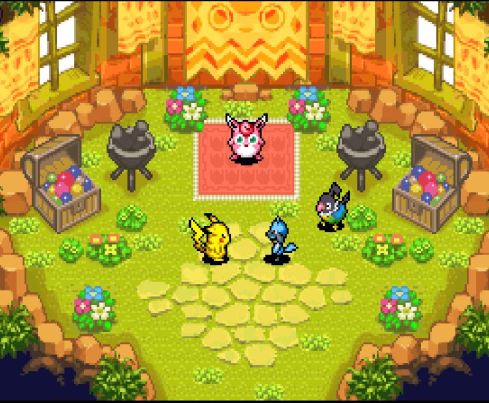
To those who have never played the Pokemon Mystery Dungeon series, this might seem like a strange pick, since Pokemon isn’t exactly known for their high emotion, well-written stories, but hear me out.
PMD doesn’t try to subvert any narrative tropes or try to craft some unique story, however, it uses all of the tropes extremely effectively, and implements them in such a way that you don’t quite seem them coming. The story uses the idea of a world of Pokemon, without any human interaction to great effect and has plenty of mystery to keep you going the whole way through.
I find it interesting how PMD doesn’t stray from the theme that the main series Pokemon games have, and yet the way the narrative is crafted is almost unrecognisable. Spending the whole game building up a friendship with your partner Pokemon is something that the main series try to achieve, but you’re fairly limited when you can’t actually communicate with them at all. So PMD thrusts this character upon you in such a way, that you end up having a fairly similar journey towards friendship with them as your character does in the game; starting off as some slightly annoying, random character that you wish would just leave you alone, to your best friend that you’ve fought with side by side the whole journey.
You add in all the other mad and wonderful complexities that the Explorers of Sky narrative has to it – which there just isn’t time to go into now – and you’ve got yourself one hell of an emotional rollercoaster ride. Explorers of Sky has a slight leg up on it from its counterparts (Explorers of Time/Darkness) since it has a set of additional stories that gives some background to all of the characters.
That final gut-punch of a narrative point is such a wonderful moment, I well up at games a fair amount, but it takes a lot to make me actually cry at something on a screen, and that’s exactly what PMD: EoS achieved.
Spec Ops: The Line
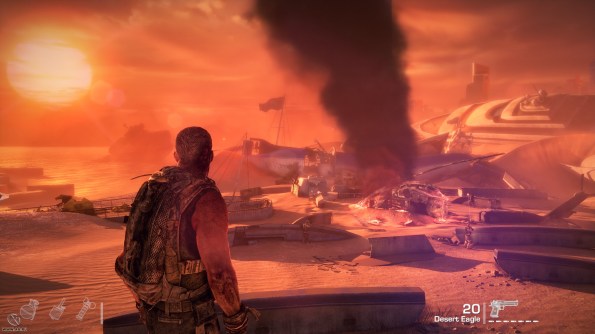
Spec Ops is the exception to my key rule of the games I play and enjoy. Usually, my general attitude is that I play games to have fun, and that’s pretty much it, but Spec Ops: The Line isn’t a fun game, not at all, so why is it here?
What happens when you play Spec Ops, is you boot it up, get told the basic premise for the game and are sent to a ruined city to go and shoot some bad guys. Then as the game progresses, the character you play as will start to do some things that you as the player will disagree with slightly, I didn’t think much of it at the time because I often disagree with characters in things and carried on.
The game then continues to reel you in with its generic shooter gameplay and basic tactics and choice systems, as you begin to notice your mission is sliding down a slippery slope. As the other members of your squad start to argue and say you’ve lost your mind, you don’t quite understand what they’re talking about, then the game reveals it’s hand and knocks you the fuck out with what it’s actually been doing the whole time.
(BIG SPOILERS RIGHT NOW)
This whole time you’ve been playing the game and shooting all these people, in an attempt to hunt down the big bad guy. He never existed, the whole game you’ve been killing American troops and civilians, and the game lingers on that fact, it spends so much time showing you just how much of a monster you truly are.
It’s a game that makes you question everything you know about military shooters and also game narratives, it’s thanks to Spec Ops that I now over analyse and instantly distrust decisions that the characters make. It taught me to just not blindly go with whatever the game is telling me and actually think for myself on what the narrative is trying to do.
It’s an uncomfortable and unpleasant game to play through, but it completely changed how I view narratives in games and how I approach a whole genre, and that is a story that deserves all the praise in the world.
Octopath Traveller
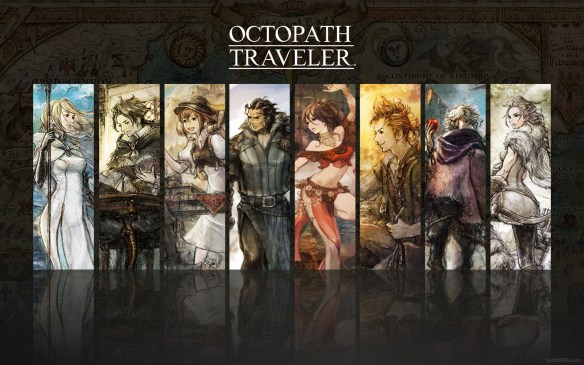
I’ve already talked a lot about Octopath Traveller, so I’m going to try my best not to repeat myself when talking about its story.
The thing that’s unique about Octopath, is that it’s not just a single linear story, it’s 8 stories, all technically separate but the way in which you encounter them makes them feel like their interweaving. Each of the stories themselves aren’t anything outstanding or revolutionary, but every single one of Octopath’s characters is so carefully and brilliantly crafted that they vastly increase the quality and impact of the stories they’re in.
Every single character in Octopath feels like a real person, and I feel like I understand them on a fairly deep level. I know who they are, what they want, how they prefer to go about getting it. Then you add on the travel banter scenes where the characters interact with each other and you slowly learn all of the little nuances to them that really make you feel like you’re on a journey with them.
When these characters are then placed into their respective stories, you feel fully aligned with them and ready to charge head-on into achieving their goals. Never once in Octopath did I find myself at odds with one of the characters, I felt like I knew them and thus understood some of their more questionable actions.
That feeling of unity with the characters is something that I can’t honestly say I’ve felt in a game on this level before or since, and it’s something I wish more games could achieve.
Thomas Was Alone
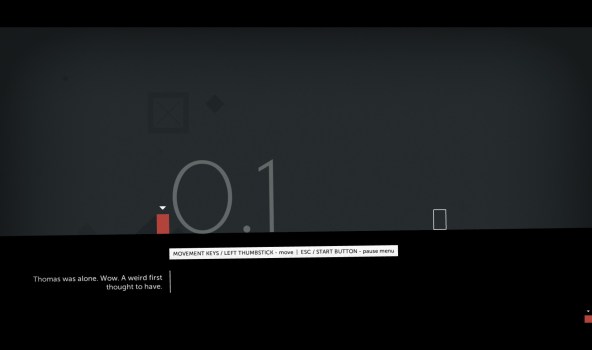
It’s a red rectangle, it can move left, right and it can jump, and it is the most well rounded, well-written character to ever come from a video game.
Made by the infinitely talented Mike Bithell (who also made Subsurface Circular & Quantum Circular), every single part of the design in this game is focused around enhancing the story. Everything is beautifully told through the narration of Danny Wallace, who’s voice creates such a warm and wonderful feeling when you listen to it, to the point where I can honestly say this story wouldn’t be as good with someone else reading it.
Even the visual design of all of the characters contributes to their personalities – despite all just being slightly different rectangles – because that’s exactly what makes this story work so well, the personalities. The characters are all AI’s that were created by some unidentified programmers, so they all feel like they’re just learning about the world. When you first encounter Thomas he’s essentially trying to come to terms with his own sentience.
All of the AI’s have moments like this, as they begin to discover emotions you quite literally see their personalities grow from nothing and form into some adorably ridiculous characters. Such as Chris, who just wants to be left alone at all times, or Claire, who can do something no one else can do so jumps to the conclusion that she must be a superhero.
Then you put these personalities together and you see these characters grow and begin to understand the world around them the more they interact with each other. This naivety from the characters really makes you feel like you need to look after them and you end up caring for them quite deeply. The characters also begin to start looking after each other as things progress, as the puzzles are designed in such a way that none of them can complete a level without help from another.
Never have I ever cared for characters in a game more than I have in Thomas Was Alone, and the world and story the game crafts is just so warm and wonderful that I can’t help but fall back in love every time I play it.
And that’s it! Thank you very much for reading, make sure to share this around of social media if you enjoyed and follow me on Twitter @10ryawoo for more thoughts on both games and wrestling. I’ll see you next time!


 The Strong Style Smark